Concerning the Creeds & Holy Scripture
Part II: Believing in Christ • Questions 18-35
Question 18: What is a creed?
A creed is a statement of faith. The word “creed” comes from the Latin credo, which means “I believe.”
Scripture: Deuteronomy 11:18–23; 26:1–11; John 20:24–29; 1 John 5:9–12
Question 19: What is the purpose of the creeds?
The purpose of the creeds is to declare and safeguard for all generations essential truths about God, the Church, and the world, as revealed in Holy Scripture.
Scripture: Deuteronomy 7:9–11; Psalm 145:4–13; John 20:30–31; 2 Timothy 1:13–14; Hebrews 2:1–4
Question 20: What does belief in the creeds signify?
Belief in the creeds signifies acceptance of God’s revealed truth and the intention to live by it. To reject any element of the creeds signifies a departure from the Christian faith.
Scripture: Matthew 16:13–20; 2 Timothy 3:14–15; 4:1–5; James 2:10–26
Question 21: Which creeds has this church received?
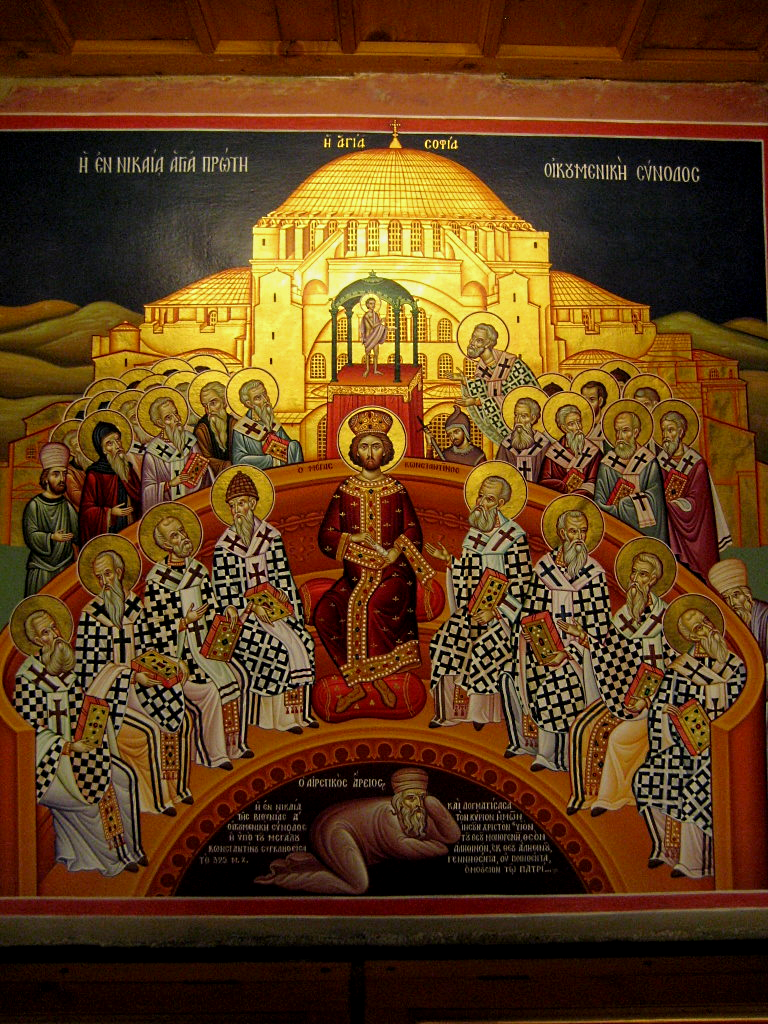
This church believes the Apostles’ Creed, the Nicene Creed, and the Athanasian Creed.
Reference: Articles of Religion, 8
Question 22: Why do you receive and believe these creeds?
I receive and believe these creeds with the Church because they are grounded in Holy Scripture and are faithful expressions of its teaching.
Scripture: Proverbs 13:14; 1 Corinthians 15:3–11; Philippians 2:5–11
Question 23: Why should you know these creeds?
I should know these creeds because they state the essential beliefs of the Christian faith.
Scripture: Deuteronomy 11:18–19; 1 Timothy 6:20–21; 2 Timothy 1:13–14
Question 24: What is the Apostles’ Creed?
The Apostles’ Creed says:
I believe in God, the Father almighty,
creator of heaven and earth.
I believe in Jesus Christ, his only Son, our Lord.
He was conceived by the Holy Spirit
and born of the Virgin Mary.
He suffered under Pontius Pilate,
was crucified, died, and was buried.
He descended to the dead.
On the third day he rose again.
He ascended into heaven,
and is seated at the right hand of the Father.
He will come again to judge the living and the dead.
I believe in the Holy Spirit,
the holy catholic Church,
the communion of saints,
the forgiveness of sins,
the resurrection of the body,
and the life everlasting. Amen.
Concerning Holy Scripture
Question 25: What is Holy Scripture?
Holy Scripture is “God’s Word written” (Articles of Religion, 20), given by the Holy Spirit through prophets and apostles as the revelation of God and his acts in human history, and is therefore the Church’s final authority in all matters of faith and practice.
Scripture: Psalm 19:7–11; Jeremiah 36:1–8; 2 Timothy 3:14–17; Revelation 1:1–11
Question 26: What books are contained in Holy Scripture?
The thirty-nine books of the Old Testament and the twenty-seven books of the New Testament together form the whole of Holy Scripture.
Reference: Articles of Religion, 6
Question 27: What is in the Old Testament?
The Old Testament proclaims God’s creation of all things; mankind’s original disobedience; God’s calling of Israel to be his people; his Law, wisdom, and saving deeds; and the teaching of his prophets. The Old Testament bears witness to Christ, revealing God’s intention to redeem and reconcile the world through Christ.
Scripture: Luke 24:44; 1 Corinthians 10:1–4; Hebrews 11
Question 28: What is in the New Testament?
The New Testament proclaims Jesus Christ’s birth, life, ministry, death, resurrection, and ascension; the Church’s early ministry; the teaching of the apostles; the revelation of Christ’s eternal kingdom; and the promise of his return.
Scripture: Luke 24:45–49; Acts 1:1–11; Philippians 2:5–11
Question 29: How are the Old and New Testaments related to each other?
The Old Testament is to be read in the light of Christ, and the New Testament is to be read in light of God’s revelation to Israel. Thus the two form one Holy Scripture, which reveals the Person of Jesus Christ and his mighty works. As Saint Augustine says, “The New is in the Old concealed, the Old is in the New revealed.”
Scripture: Augustine of Hippo, Questions in the Heptateuch 2.73; Matthew 5:17–18; Luke 24:25–27
Question 30: What does it mean that Holy Scripture is inspired?
Holy Scripture is “God-breathed,” for the biblical authors wrote under the guidance of God’s Holy Spirit to record God’s Word.
Scripture: Deuteronomy 8:3; Matthew 4:4; 2 Timothy 3:16–17; 2 Peter 1:19–21
Question 31: What does it mean that Holy Scripture is the Word of God?
The Old and New Testaments are inspired by the Holy Spirit and are therefore the Word of God written. God is revealed in his mighty works and in the incarnation of our Lord, which are made known through the inspired writings of the biblical authors. God “has spoken through the prophets” (Nicene Creed) and continues to speak through Scripture today.
Scripture: Psalm 33:4–9; Jeremiah 1:9; Ezekiel 2:1–3:4; 1 Thessalonians 2:13; 2 Peter 3:15–16; Hebrews 1:1–2
Question 32: Why is Jesus Christ called the Word of God?
The fullness of God’s revelation is found in Jesus Christ, who not only fulfills the Scriptures, but is himself God’s Word, the living expression of God’s mind. The Scriptures testify about him, “In the beginning was the Word,” and “The Word became flesh and dwelt among us” (John 1:1, 14). Therefore, “ignorance of the Scriptures is ignorance of Christ.”
Scripture: Jerome, Commentary on Isaiah, prologue; Genesis 1:26–27; Psalm 33:1–12; Colossians 1:15–19
Question 33: How should Holy Scripture be understood?
Because Holy Scripture was given by God to the Church, it should always be understood in ways that are faithful to its own plain meaning, to its entire teaching, and to the Church’s historic interpretation. It should be translated, read, taught, and obeyed accordingly.
Scripture: Nehemiah 8:1–8; Psalm 94:8–15; Acts 8:26–35; 18:24–28; Jerusalem Declaration, Article 2; Articles of Religion, 20
Question 34: How does the Holy Spirit use Holy Scripture in your life?
Through Holy Scripture, the Holy Spirit will teach, rebuke, correct, and train me in the righteousness that God desires. The prayerful study of Scripture forms me for life in Christ and the service of God and my neighbor.
Scripture: Psalm 119:105; John 14:26; 2 Timothy 3:16–17; Hebrews 4:12–13; see questions 227–32
Question 35: What are the Apocrypha?
The fourteen books of the Apocrypha, historically acknowledged by this church, are pre-Christian Jewish writings that provide background for the New Testament and are included in many editions of the Bible. They may be read as examples of faithful living but “not to establish any doctrine.”
Reference: Articles of Religion, 6
Continue Your Study
 Amateur Anglican